Comparative Analysis of HICLOVER Waste Incinerators: Technology, Compliance, and Global Applications
Understanding Modern Waste Incineration Technology
In the realm of waste management, **waste incinerators** stand as critical infrastructure for the safe and efficient disposal of diverse waste streams. Meeting stringent industrial standards is paramount. Modern systems are engineered to operate within specific temperature ranges, such as a secondary chamber temperature exceeding 1100°C to ensure complete combustion. Engineering reliability is a primary design consideration. The selection of appropriate incineration technology requires a comprehensive understanding of combustion principles, regulatory frameworks, and operational requirements. The core function of a **medical waste incinerator** is to thermally decompose waste materials, reducing their volume and eliminating pathogens or hazardous components. This process typically involves high-temperature oxidation, converting the waste into ash, flue gas, and heat. Modern incinerators employ sophisticated control systems to manage temperature, airflow, and residence time, optimizing combustion efficiency and minimizing emissions.
The design and operation of **waste incinerators** are governed by a complex web of regulations and standards. These standards, such as those set by the World Health Organization (WHO) and the European Union (EU) emission frameworks, dictate permissible emission levels for various pollutants, including particulate matter, dioxins, and furans. Compliance with these regulations necessitates the use of advanced emission control technologies, such as scrubbers and filters. Furthermore, many jurisdictions require regular monitoring and reporting to ensure ongoing compliance.
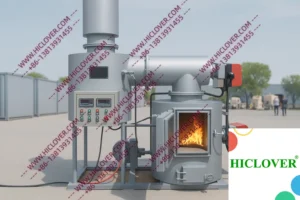
Dual chamber incinerators are a particularly effective design for achieving complete combustion and minimizing emissions. In a dual chamber system, waste is initially combusted in a primary chamber, where it is heated to high temperatures in a controlled environment. The resulting gases then pass into a secondary chamber, where they are subjected to further combustion at even higher temperatures. This two-stage process ensures that all organic compounds are fully oxidized, reducing the formation of harmful pollutants. The importance of high temperature retention within these chambers cannot be overstated, as it directly impacts the efficiency of pollutant destruction.
Types of Waste Incinerators: A Comparative Overview
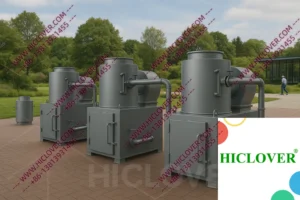
The selection of a suitable **waste incinerator** depends on several factors, including the type and volume of waste to be processed, the location of the facility, and the applicable regulatory requirements. Fixed incinerators are typically large-scale, centralized facilities designed to handle significant volumes of waste. These incinerators are well-suited for urban areas and industrial complexes where waste generation is high and consistent. Containerized incinerators, on the other hand, offer greater flexibility and portability. These systems are self-contained within shipping containers, making them easy to transport and deploy in remote locations or temporary settings.
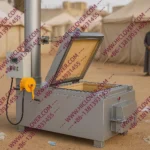
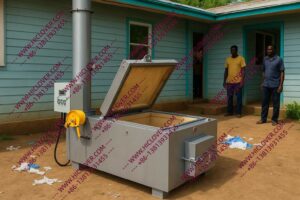
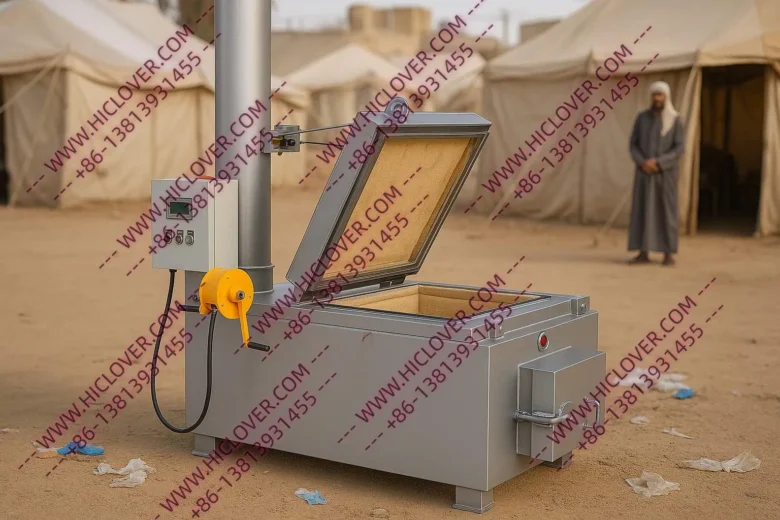
**HICLOVER** specializes in containerized modular systems, offering a mobile plug-and-play design that simplifies installation and operation. These systems are particularly well-suited for decentralized waste management strategies and can be rapidly deployed in response to emergencies or changing waste management needs. For instance, a **Togo portable medical waste incinerator** might be essential for rapidly establishing sanitation infrastructure in a crisis zone or humanitarian camp.
Control systems also play a crucial role in the performance and reliability of **waste incinerators**. PLC (Programmable Logic Controller) systems offer automated control over various parameters, such as temperature, airflow, and waste feed rate. This automation enhances efficiency, reduces operator workload, and improves process consistency. Manual control systems, while less sophisticated, may be more suitable for smaller operations or situations where skilled operators are readily available. The choice between PLC and manual control depends on the specific needs and resources of the facility.
Emission control is another critical aspect of **waste incinerator** design. Dry scrubbers use dry reagents, such as lime or activated carbon, to neutralize acidic gases and adsorb pollutants. Wet scrubbers, on the other hand, use liquid solutions to capture pollutants. Wet scrubbers are generally more effective at removing a wider range of pollutants, but they also generate wastewater that requires treatment. The selection of an appropriate scrubber technology depends on the specific pollutants present in the flue gas and the available water resources.
Considering the needs of diverse regions, factors such as **Mozambique medical incinerator prices** are also relevant. These prices are influenced by the technology used, capacity, and associated emission control systems.
HICLOVER Waste Incinerators: Engineering Excellence and Global Applications
**HICLOVER** leverages over 16 years of engineering experience to provide high-quality **waste incinerator** solutions. As a factory direct supplier, **HICLOVER** offers customizable chamber volumes and stable supply chains, ensuring reliable performance and long-term value. The company’s factory manufacturing capability allows for precise control over the design and construction process, resulting in systems that are tailored to meet specific customer needs. Unlike trading companies, **HICLOVER** provides direct access to engineering expertise and comprehensive support throughout the entire lifecycle of the incinerator.
**HICLOVER waste incinerators** are designed for multi-fuel operation, accommodating diesel, LPG, and natural gas. This flexibility enhances operational resilience and reduces dependence on a single fuel source. The dual combustion chambers ensure complete combustion and minimize emissions, while the optional wet or dry scrubbers provide additional pollution control. The PLC automation systems further enhance efficiency and reduce operator workload.
The containerized modular design of **HICLOVER** systems makes them particularly well-suited for remote sites and mobile applications. [https://www.hiclover.com/](www.hiclover.com/) This is especially beneficial for industries such as remote mining or oil camps, where waste management infrastructure may be limited. The mobile plug-and-play design simplifies installation and relocation, allowing for rapid deployment in response to changing needs. For example, in **Equatorial Guinea**, the need for reliable **crematorium manufacturers** can be addressed through the deployment of **HICLOVER** containerized systems, offering a practical solution where traditional infrastructure may be lacking.
Global infectious disease preparedness highlights the critical need for robust waste management solutions. **HICLOVER waste incinerators** play a vital role in preventing the spread of infectious diseases by safely and effectively disposing of contaminated waste. Similarly, crisis zones and humanitarian camps often require rapid deployment of waste management infrastructure to protect public health. **HICLOVER**’s containerized systems offer a practical and efficient solution for these challenging environments.
Increasing carbon emission reduction pressure and a growing emphasis on ESG (Environmental, Social, and Governance) compliance are driving demand for cleaner and more efficient waste management technologies. **HICLOVER waste incinerators** are designed to minimize emissions and comply with stringent environmental regulations. Furthermore, the company is exploring energy recovery systems to capture and utilize the heat generated during incineration, further reducing the environmental impact. Searching online for “[https://www.google.com/search?q=medical+incinerator+secondary+chamber+temperature+standard](www.google.com/search?q=medical+incinerator+secondary+chamber+temperature+standard)” provides additional insight into the critical operating parameters of these systems.
Procurement Considerations for Waste Incinerators
When procuring a **waste incinerator**, it is essential to consider several key factors, including the type and volume of waste to be processed, the applicable regulatory requirements, the location of the facility, and the available budget. A thorough waste characterization study should be conducted to determine the composition and quantity of waste to be incinerated. This information will help determine the appropriate size and type of incinerator.
Compliance with environmental regulations is a non-negotiable requirement. The incinerator must be designed and operated to meet all applicable emission standards and permitting requirements. It is essential to work with a reputable supplier who has a proven track record of regulatory compliance. **HICLOVER** has extensive experience in navigating global regulatory landscapes and can provide comprehensive support in obtaining the necessary permits and approvals.
The location of the facility can also impact the selection of a **waste incinerator**. Remote sites may require containerized systems that can be easily transported and installed. Urban areas may require more sophisticated emission control technologies to minimize the impact on air quality.
Budget considerations are also important. The total cost of ownership should be evaluated, including the initial purchase price, installation costs, operating expenses, and maintenance costs. **HICLOVER** offers a range of financing options to help customers acquire the incinerator that best meets their needs. Furthermore, the company’s stable supply chain and factory direct pricing ensure competitive **medical incinerator prices** and transparent cost structures.
The increasing focus on supply chain resilience has also become a critical factor in procurement decisions. **HICLOVER**’s commitment to maintaining a stable and reliable supply chain ensures that customers can depend on the availability of spare parts and support services throughout the lifecycle of the incinerator. This is particularly important in today’s volatile global market.
For those seeking **pet crematory equipment**, **HICLOVER** offers specialized solutions tailored to the unique requirements of animal cremation. These systems are designed to provide a dignified and respectful cremation process while meeting all applicable environmental regulations.